

what permission looks like
a page on who gets to take and what they're taking. sit with it. 5 min.

what's playing: juls, odeal, drake, premo rice.
i went ice skating for the first time this week. i’m not good at it. not even a little.
but somewhere on that rink with my arms flailing and ankles folding, i stopped trying to be good. i just surrendered to it. let myself be bad. let myself be seen being bad.
a sermon hit me later. “real faith isn’t measured by how loud you shout at the start. it’s measured by if you have faith at the finish.”
i’ve been sitting with that. the part about finishing. about staying.
and then i looked at the news and saw something shift.
the rules changed this week.
most people didn’t notice.
what is actually happening.
the us took venezuela. not through sanctions. not through diplomacy. through force. marines on the ground, maduro in custody, a new government being installed.
this is monroe doctrine energy. the hemisphere belongs to us. we’re just reminding everyone.
but here’s what most people miss: this wasn’t about oil that’s flowing. it was about oil that’s waiting.
venezuela has the largest proven oil reserves in the world. three hundred three billion barrels. seventeen percent of the global total. more than saudi arabia.
but production collapsed from over three million barrels per day in the early 2000s to under one million now. at current rates, those reserves would last eight hundred years. the gap between what’s in the ground and what’s coming out is enormous.
and that gap is the point.
most of venezuela’s oil is heavy, sour crude. dark, acidic, high in sulfur. it sits in the orinoco belt. a six hundred kilometer stretch of tar sands holding deposits that rival the world’s entire lighter oil reserves. but heavy crude is harder to refine. needs specialized infrastructure. trades at a twenty-five dollar discount to brent which is around thirty-five dollars a barrel.
the economics are brutal. venezuelan projects need eighty dollars per barrel to break even. oil is around sixty to seventy today. restoring production would require one hundred eighty-three billion dollars over more than a decade.
compare that to the competition. saudi arabia produces at three to five dollars a barrel. russia at ten to twenty. us shale at sixty-five. venezuela at eighty-plus.
at current prices, those reserves sit idle. they’re not worth extracting.
so why take them?
because you don’t take assets for what they’re worth today. you take them for what they’ll be worth when you control enough to set the terms.
and venezuela isn’t the only play. the us is eyeing greenland too. for their rare earths. they have seventeen minerals we don’t have. china controls ninety-nine percent of heavy rare earth processing. defense needs them. china’s been making moves on greenland for seven years.
but greenland is complicated. no infrastructure. no energy for mining. uranium ban. mining isn’t loved there. this isn’t a near-term solution. it’s a long game.
both plays share the same logic: position now, extract later.
and here’s what makes it heavier. the un way of doing things is in serious trouble. the us taking venezuela gives implicit permission. russia now has cover for ukraine. china is watching for taiwan.
three spheres of influence are forming. and each one is watching what the others get away with.
what’s driving this? the math doesn’t work anymore. us interest payments now exceed what we spend on defense. trump announced a fifty percent increase in defense spending. one and a half trillion. that boosts gdp short-term but adds to debt and inflation pressure. tariffs won’t offset it cleanly.
acquisition as economic strategy. not just power projection.
what i noticed.
the us didn’t ally with a new venezuelan government. it installed one. “acquiring” not “allying.” the language matters.
weak target first. you test permissions on someone who can’t fight back. venezuela couldn’t. now russia and china know what’s possible.
commodities aren’t just economic anymore. they’re strategic. ai needs power and chips. brics wants a new monetary system backed by commodities. china dominates mineral processing. control of resources is leverage in the tech race, the currency wars, and defense.
the oil isn’t scarce. the economics of extracting it profitably is what matters. reserves mean nothing if extraction costs too much.
but that’s exactly why you take it now. when it’s uneconomical. when no one else wants it. then you wait.
how i’m seeing it.
the world order is fragile. the way of doing things is shifting before our eyes.
unilateral is becoming multipolar. rules-based is becoming control-based. and the things that matter are physical. copper, oil, rare earths, land. the stuff you can touch. the stuff that’s hard to make more of.
ray dalio has been saying this since 2023. i went back to his framework. the five forces. the three wars. he saw the capital war and the trade war coming. now we are staring at the physical war.
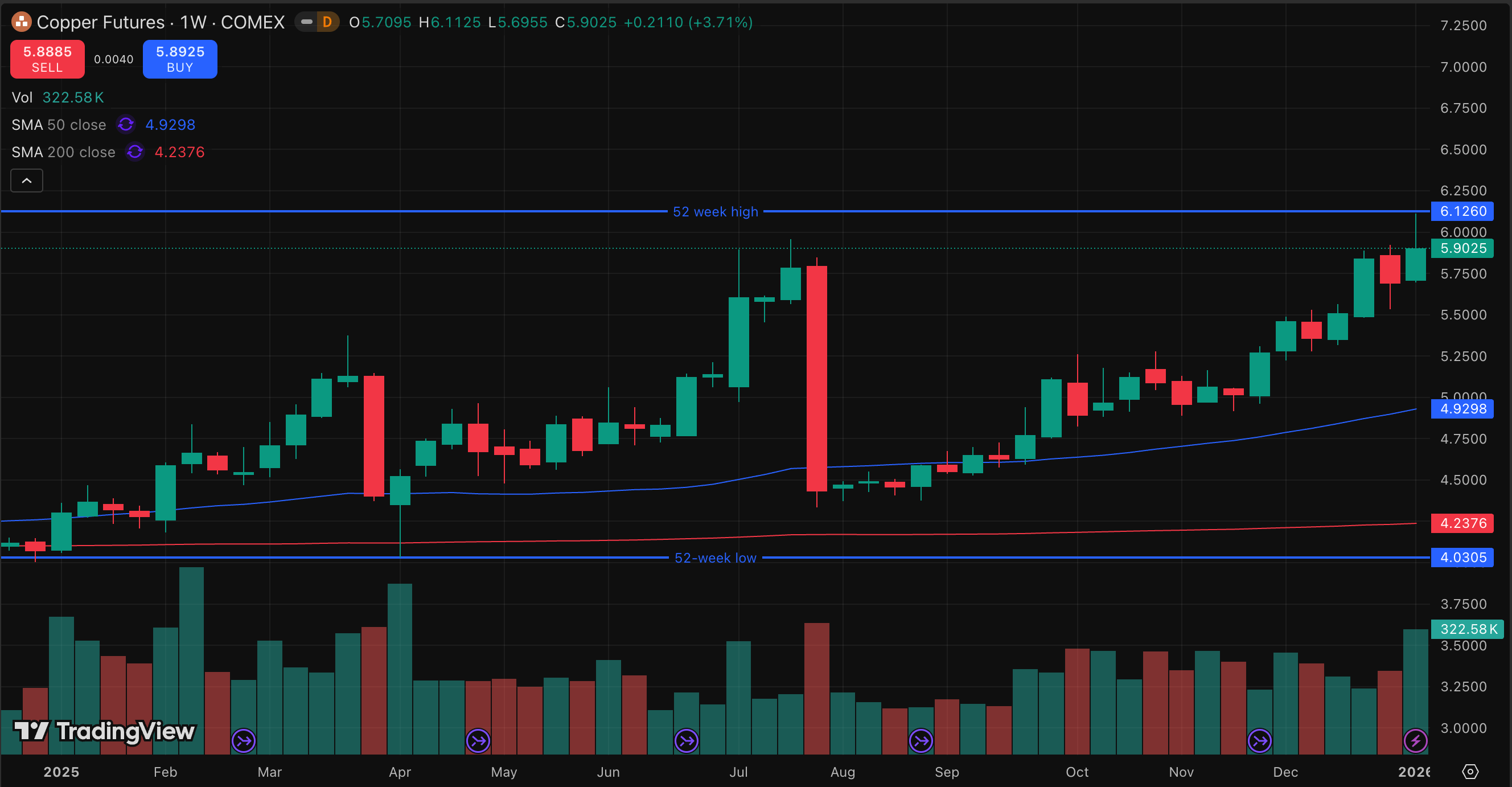
the market sees some of it. copper was up fifty-one percent in 2025. gold is near highs. but oil? the market shrugged at venezuela. global oversupply of four million barrels per day. the disruption barely registers.
the market is pricing physical scarcity in some places. ignoring geopolitical risk in others.
near-term, i expect more “acquisitions.” the playbook worked. medium-term, russia tests its permission to take ukraine, maybe further. long-term, china’s clock keeps ticking. their economy is struggling. taiwan is the release valve.
but here’s what dalio also taught me: things take longer than you think. he called this shift in 2023. it’s 2026 and still no war. timing humility matters.
things exist in duality. it depends how you look at it. better yet things take on what you want to see.
maybe that's what this week taught me. the ice rink and the news are the same lesson. you don't know if you're right. you stay anyway. you have faith at the finish.
some lingering thoughts.
is this the new normal or a blip?
if trump goes after greenland, what happens to nato?
what if the market is right to shrug at venezuela?
russia couldn't protect venezuela. does that weaken their sphere or make them more desperate?
if china’s stimulus works and they buy time, does the taiwan clock reset or just pause?
what am i willing to be wrong about? the permission structure. maybe the world pushes back. maybe the rules hold longer than i think.
the chart: copper futures (hg). new fifty-two week high, up fifty-one percent in the last year. is the scarcity already priced or is this just the beginning?
the read: china’s broken balance sheet: why i think china will invade taiwan before 2030
the question i can’t shake: what does the world look like when taking is easier than asking?
i'm unsettled. but i'm leaning in. sitting with it. watching what unfolds.
— b.