

two different conversations
a page on how your position shapes what you're allowed to see. sit with it. 6 min.

what’s playing: the night after the argument got quiet. — big k.r.i.t., quasar, leisure dept.
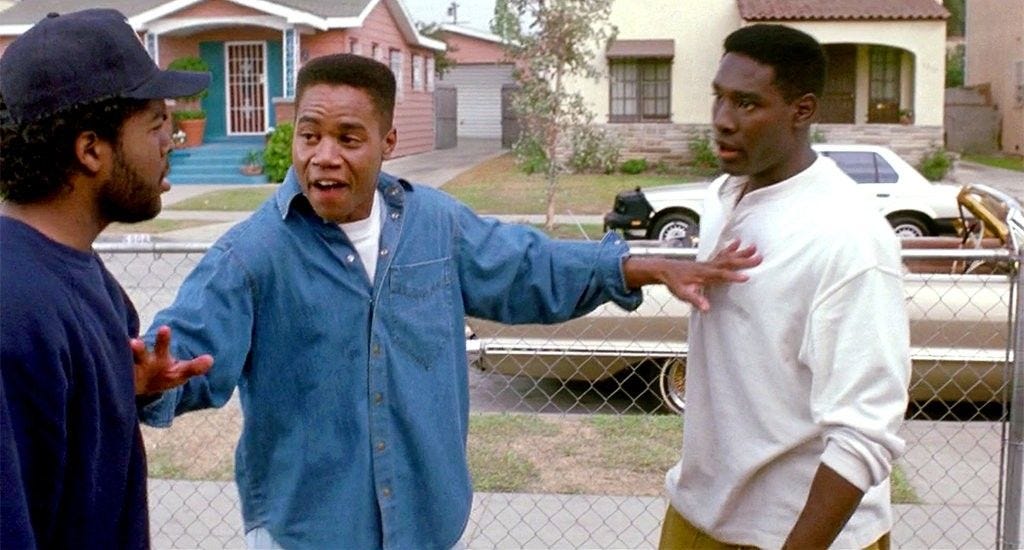
we were arguing about the war in the groupchat. the usual thing. who’s right, what’s really happening, what it means.
i laid out my read. the K.
how where you land on it shapes everything you see after that. a few people pushed back. it got heated in the way groupchats do.
fast, then quiet.
and then he shared his portfolio.
no words. just the screenshot. and something in the conversation ended without anyone saying it was over.
i sat with that for a while tonight. trying to figure out what it meant. and then, in a different conversation it hit me. he manages hundreds of millions of dollars. if i were him, i don’t know if i would have stayed in the conversation either.
that’s the thing i can’t stop thinking about.
what is actually happening.
there’s a war. and depending on where you sit. financially, politically, geographically. it looks completely different. not like people are seeing different details. like they’re observing different realities.
this is the K.
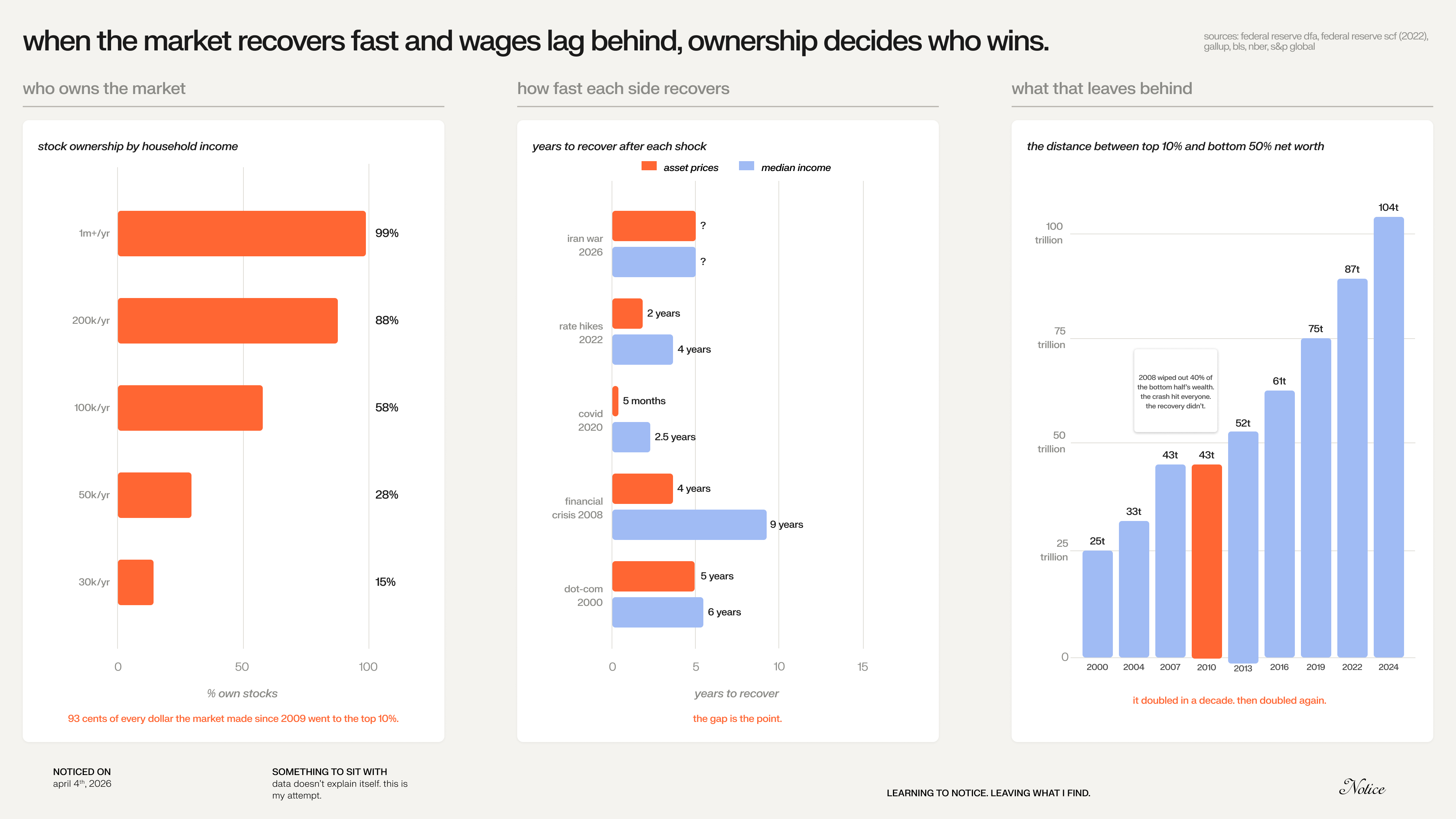
economists have had a name for it since 2008. one path climbs. one descends. the S&P has climbed over one hundred and thirty percent since march 2020. the top one percent hold nearly thirty-two percent of the nation’s total wealth. the highest since records began in 1989. the top ten percent drive half of all consumer spending. half.
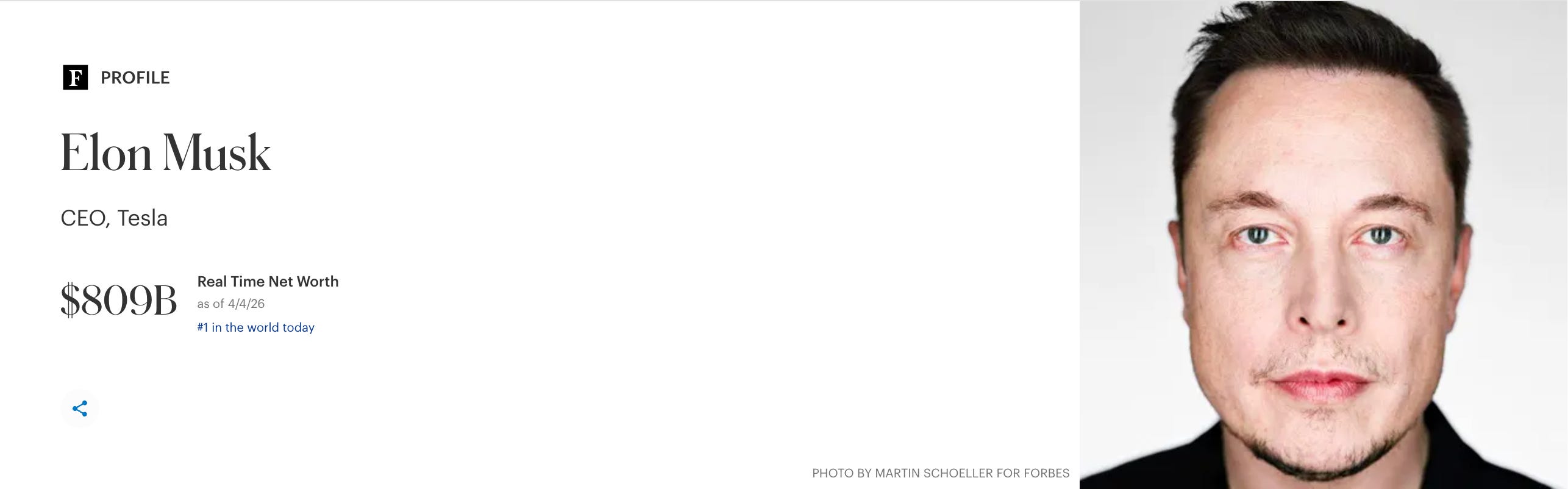
this week, one man’s net worth crossed eight hundred billion dollars. more than the GDP of switzerland. more than the bottom fifty percent of americans combined. in december 2024 he was worth four hundred billion. he added the second four hundred billion in fourteen months. fourteen months.
on the other side of that K.
she works two jobs. nursing. fills her tank twice a week to get there. gas was under three dollars before february twenty-eighth. it crossed four dollars last week. she’s doing the math every time she pulls up to the pump. groceries were already up thirty percent since 2020. now fertilizer prices are spiking because the strait of hormuz is closed, which means the food she’s already stretching to afford will cost more by summer. she’s not watching the war on a bloomberg terminal. she’s watching it at the register.
same war. different country.
same economy. different country.
and how you land on the K isn’t just about your politics. it’s about your position. what you own. what you owe. what a different outcome costs you. your financial position shapes your observation apparatus — the way a lens shapes what light reaches your eye. you’re not choosing to see things differently. you’re structurally positioned to.
the friend who walked away wasn’t wrong. he just couldn’t see what i was pointing at from where he was standing. and i couldn’t see what he already knew from where i was standing. the argument wasn’t just heated. it was already over before it started.
what i noticed.
upton sinclair said it cleaner than anyone. it is difficult to get a man to understand something when his salary depends upon his not understanding it. he wasn’t talking about stupidity. he was talking about structure. the incentive reshapes the perception before you even notice it happening.
that’s what the portfolio screenshot was. not deflection. his answer. the most honest thing he could say in that moment.
i am here. this is what i see from here. your argument doesn’t reach this position.
the research backs this. paul piff at UC Berkeley has spent twenty years studying what capital does to people. as wealth increases, empathy goes down. entitlement goes up. self-interest feels more justified. and the disturbing part — the distortion starts before the money is even real. in one study, fake monopoly money was enough to change behavior within minutes. that’s not a character flaw. that’s a mechanism. and it operates on everyone — including you.
what i’m starting to understand is that this isn’t a bias you correct for. it’s a pressure that builds with capital. the position doesn’t just make certain truths expensive to hold. at some point, it makes them impossible to reach.
ambiguity is a temporary privilege.
the honest answer is i stayed in the conversation because i’m not fully on either side yet. i can still see both. and somewhere underneath the argument i knew that. the window doesn’t stay open.
how i’m seeing it.
paul tudor jones is one of the most aggressive traders alive. he also runs robin hood, one of the largest poverty-fighting foundations in the country. he doesn’t resolve the tension between those two things. he holds it. his line: i am a capitalist. and i believe capitalism has to evolve. not abandoning the game. playing it differently.
chamath’s frame is the one i keep returning to. standing at stanford, he said it plainly: “money drives the world for better or for worse. you have a moral imperative to get it and then use it to make a difference.” and then, almost as an aside: “there are about 150 people who control most money in the world and they don’t give a shit about what you think about their worldview. so if i can accumulate capital, why shouldn’t i deploy it against mine?”
get the money. then create new rules.
but the part of that sequence nobody talks about: more capital doesn’t automatically produce more generosity. in some cases, it does the opposite. the sequence only works if the person who arrives at the money is still the same person who set the intention. that’s the variable nobody accounts for.
howard marks draws a distinction i think about now. the best investors don’t suppress the feeling. they separate it from the action. the emotion exists in one room. the trade lives in another. that’s not detachment. that’s compartmentalization with integrity. knowing which room you’re in. not pretending the other one doesn’t exist.
different people solve for the pressure in different ways. none of them remove it.
some lingering thoughts.
if i’m honest: if i were managing hundreds of millions of dollars, would i have stayed in the groupchat? i want to say yes. but i don’t know. and the not knowing is the part that matters.
james baldwin wrote that nothing can be changed until it is faced. what i keep sitting with is the inverse. every conversation you exit is a data point you stop collecting. not just a social thing. an epistemological one. the conversations you stop having narrow what you’re able to see. quietly. gradually. before you notice.
the higher your position, the more expensive it becomes to hear things that contradict it. so you hear less of them. and over time, your reality narrows — without you noticing.
it’s less about character than people want to admit. and more about position than they’re comfortable facing.
what am i willing to be wrong about? that i can still see both sides. that the window is still open. that i’m writing this from somewhere neutral. i’m not. i’m writing this from a position too. one comfortable enough to aestheticize the tension, articulate the mechanism, and still not name what it’s already hiding from me.
that’s the question i can’t shake: what are you already not seeing from where you currently stand?
she’s still at the register. doing the math. that’s not a metaphor. that’s just tuesday.
the chart: when the market recovers fast and wages lag behind, ownership decides who wins.
the watch: trump says the economy is strong. voters disagree.
i’m still in the conversation. i don’t know for how long. i’m watching what that costs me. and what it costs to leave.
— b.