

send me
a page on what it costs to see clearly when the people around you can't. sit with it. 9 min.

what's playing: what's going on. — marvin gaye, sam cooke, le'andria johnson, curtis mayfield.
jennifer hudson sang “a change is gonna come” at jesse jackson’s funeral this week.
if you know the song’s origin, you know what that moment was carrying. sam cooke didn’t write it because he was certain. he wrote it because bob dylan, a white folk singer from minnesota, had written “blowin’ in the wind” and cooke heard it and felt something he couldn’t name. something close to shame. that someone else had seen his people’s pain more clearly than he had. before he was ready. before the room was ready.
the song took him a year to finish. not because he didn’t know what he wanted to say. because he did. and saying it out loud in a world that wasn’t ready meant carrying it alone until it wasn’t.
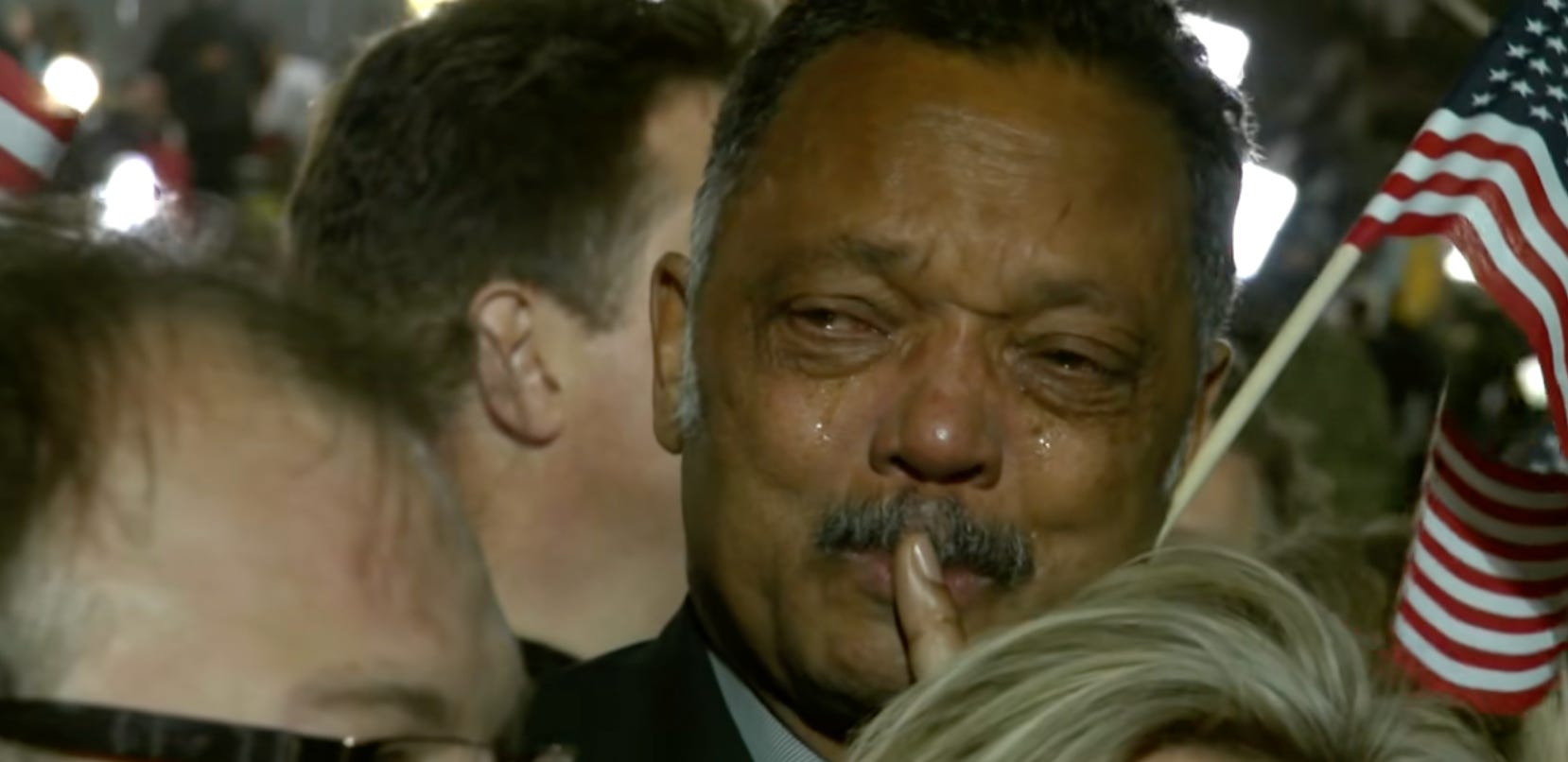
then i watched jesse jackson’s face at obama’s election. tears on his cheeks. not grief. not surprise. recognition. a man who’d spent forty years in that room. carrying something the room wasn’t ready for. watching it land somewhere real. finally.
i thought about that face a lot this week.
i’ve been in a lot of arguments.
what is actually happening.
on february twenty-eighth the US and israel launched operation epic fury. over a thousand targets hit in the first twenty-four hours. b-2 stealth bombers. bunker-busting bombs. the supreme leader killed. the most concentrated display of american air power in decades.
the official reasons kept changing. trump said the goal was eliminating imminent threats. and urged iranians to take back their country. rubio said the US had to move first because it knew israel was about to strike, which would have triggered iran to hit american forces. hegseth called the mission laser-focused. destroy the missiles, sink the navy, no nuclear weapon. when trump’s words sounded like regime change, hegseth pushed back. “this is not a so-called regime change war. but the regime sure did change.” by day four, a senior democrat on the senate intelligence committee said he’d watched the stated goals shift four or five times.
three spokespeople. four or five stated goals in four days. most people in my world grabbed one explanation and ran with it. and the arguments started.
here’s what most people miss.
venezuela and iran aren’t separate moves. they’re the same move.
china is the world’s largest importer of oil. roughly half of everything it imports flows through the strait of hormuz. the narrow waterway between iran and the arabian peninsula connecting the persian gulf to the rest of the world. when epic fury started and iran began retaliating, that strait effectively closed. tanker traffic dropped between seventy and ninety-four percent. shipping insurance suspended. oil moving toward a hundred dollars a barrel.
the trump-xi summit is in four weeks.
venezuela’s oil got sanctioned earlier this year. iran’s oil is now disrupted. those are two of china’s biggest energy sources. cut off at the same time. xi walks into april’s summit watching his country’s energy clock run down, sitting across from the man who started it.
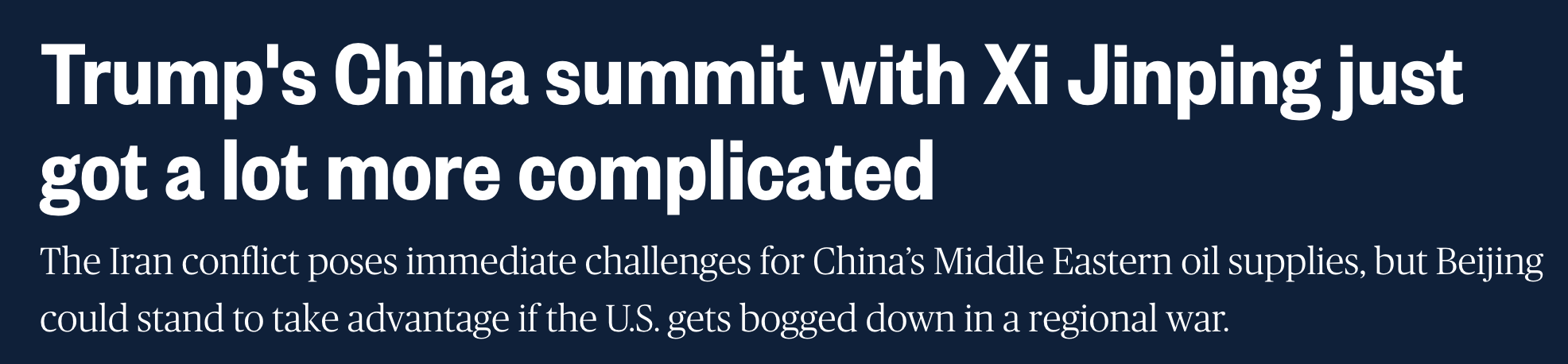
that’s leverage. and it’s leverage that took something to create.
here’s the uncomfortable part.
to defend against iranian drones and missiles, the US relies on interceptor systems. expensive rocket-powered missiles, made by lockheed martin and raytheon, that shoot down incoming threats mid-air. they’re the shield. and shields run out.
iran has fired more than two thousand drones and five hundred ballistic missiles since epic fury began. the US has been intercepting them across five countries simultaneously. israel, the UAE, kuwait, bahrain, and qatar. each one drawing from the same finite stockpile.
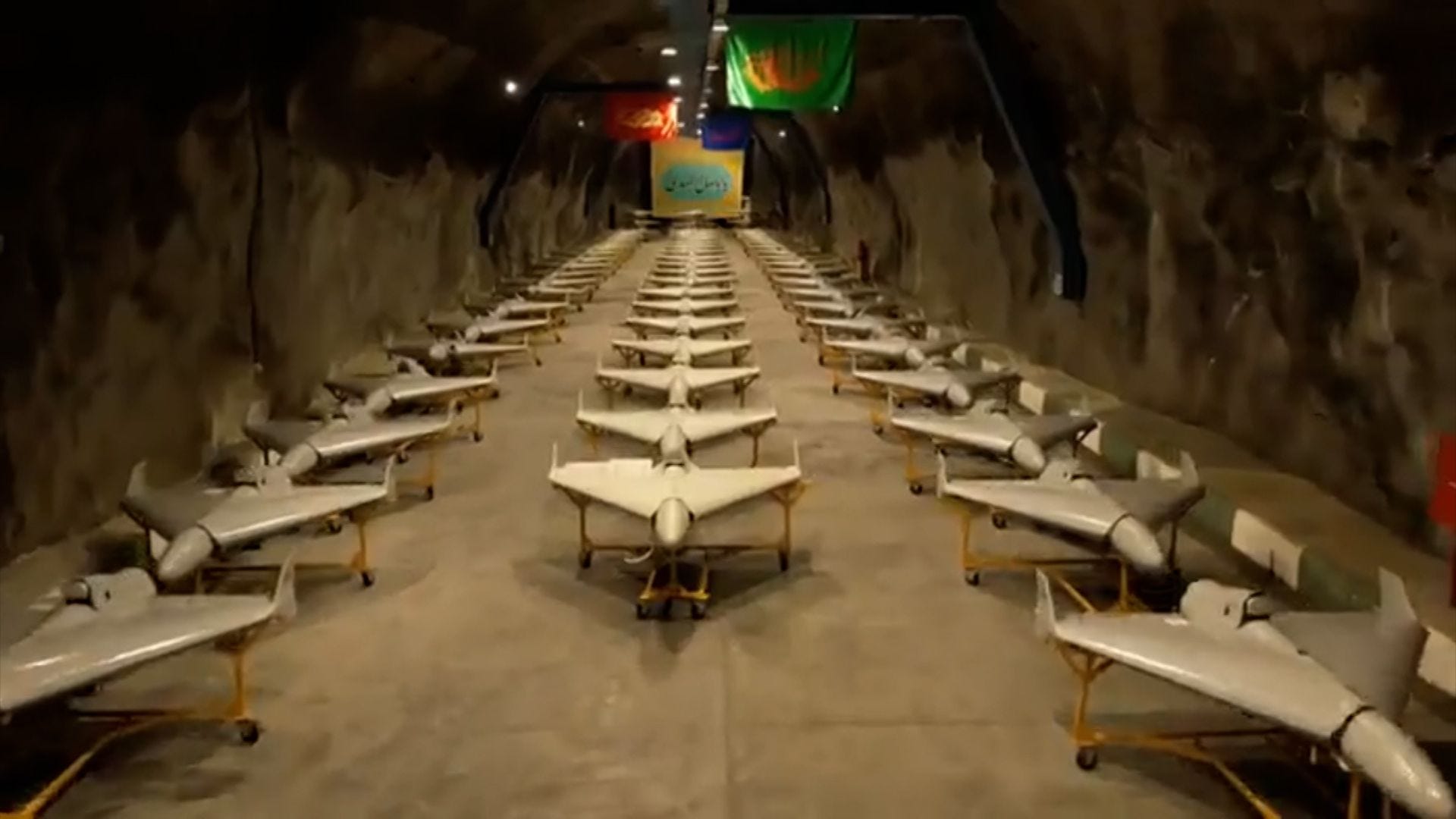
the administration argues they’ve been going after the source. hegseth said the US is hunting and killing iran’s launchers. by march fifth, ballistic missile attacks were down ninety percent from day one. drone attacks down eighty-three percent. the case is that destroying launchers solves the math. fewer things to intercept means the shield lasts longer.
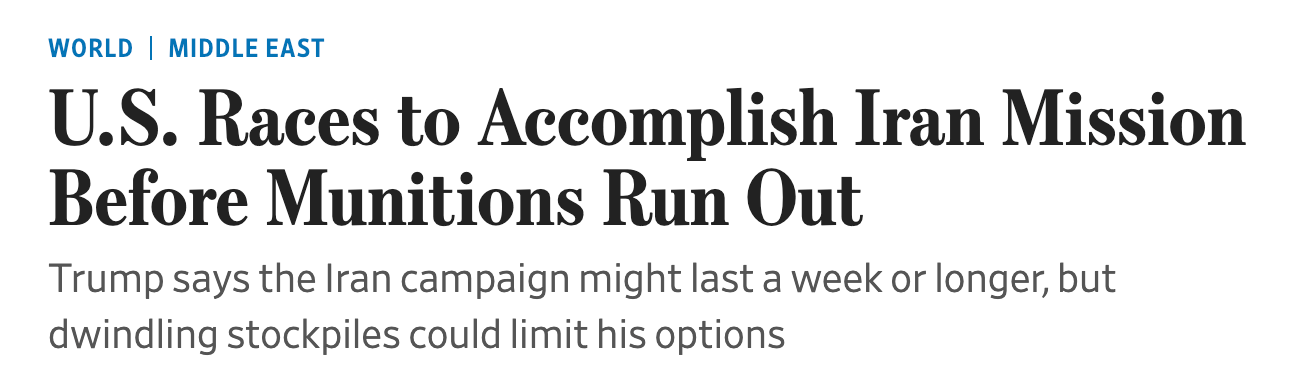
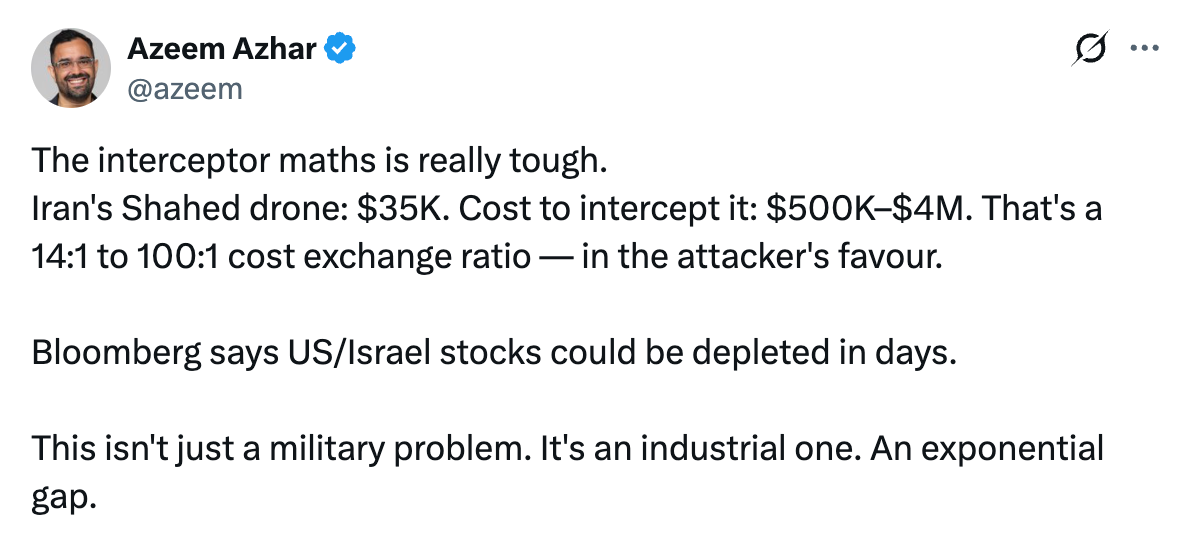
that argument is real. but it rests on whether they can find launchers faster than iran can relocate them, and whether the stockpile holds in the meantime. each iranian drone costs roughly thirty-five thousand dollars to build. each US intercept costs between five hundred thousand and four million. the math is uncomfortable regardless of whose numbers you use.
the US military’s central command has reportedly told planners internally this war could run through september.
seven months. and china is watching every move.
what i noticed.
some analysts are saying this is catastrophic for china. that xi’s energy story broke. that gulf states pivot toward the US. that china has no good options. compelling. might be right. but it rests entirely on iran being quickly and decisively finished.
the iranian foreign minister’s interviews don’t sound like a regime in collapse. calm. organized. not asking for a ceasefire. that’s a regime that has decided survival is the strategy. absorb the strikes. keep firing. wait out the political clock. the US midterms are twenty months away. iran doesn’t need a military victory. they need a negotiated exit before american public opinion runs out. hezbollah ran this playbook against israel in 2006. they didn’t win. they didn’t lose. the war ended. they were still standing.
the part that doesn’t get said plainly, the US proved it can project force at this scale, and in doing so revealed exactly what it costs. the leverage on china and the vulnerability to china landed in the same week.
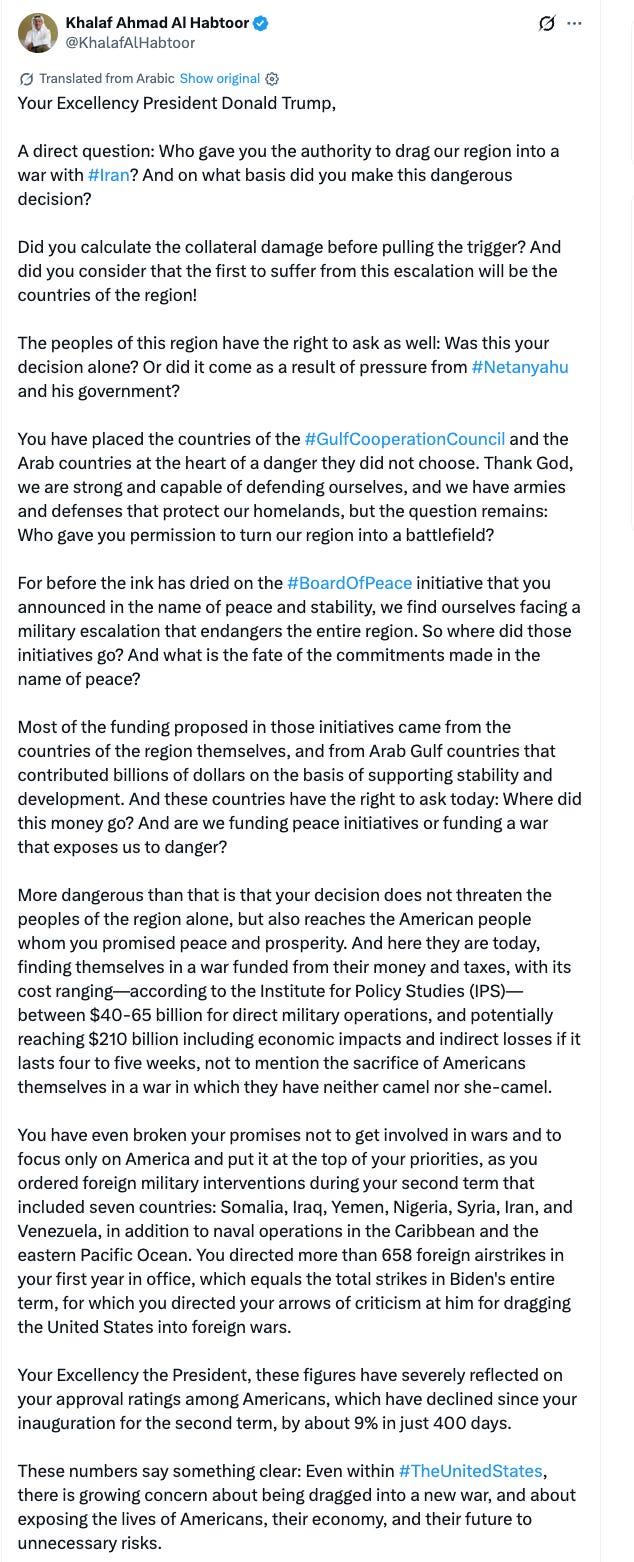
the GCC open letter barely made the front pages. the saudi-led bloc of gulf states, the region the US is supposedly protecting, publicly rebuked trump. estimated forty to sixty-five billion in direct costs, two hundred ten billion with spillover. the alliance that keeps global oil priced in dollars is quieter and more fragile than it looks.
russia didn’t fire a shot. sanctions eased. oil prices rose. western attention split. putin came out ahead and almost nobody led with that.
how i’m seeing it.
china was already under pressure before epic fury started.
their real estate market, which makes up a larger share of the economy than US housing did before 2008, is still unwinding. major developers defaulted. millions of apartments sold to buyers who haven’t seen them completed. overall debt is near three hundred percent of what the economy produces in a year. youth unemployment near seventeen percent. twelve million college graduates entering the job market this year. the official growth target is the lowest since 1991. xi has been prioritizing political control over the structural reform that might actually fix it.
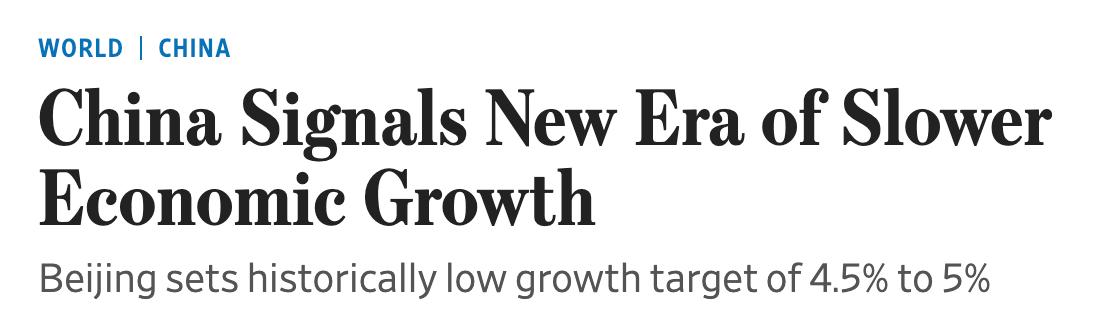
a disrupted energy supply isn’t just bad news in that context. it’s a pressure point arriving at exactly the wrong moment.
but here’s what i kept sitting with all week. what’s happening in the middle east isn’t just about the middle east.
taiwan is a self-governing island of twenty-three million people. china has claimed it for decades. xi has called its reunification a historical inevitability. the only thing that has consistently kept china from moving on it is the belief that the US would intervene. and that the US military could win if it did.

both of those beliefs just got complicated.
the USS abraham lincoln carrier strike group, previously stationed in east asia specifically to deter china, was redeployed to the middle east to support epic fury. analysts at the stimson center wrote in foreign affairs this week that US indifference to taiwan, combined with watching interceptor stockpiles deplete in real time, could lead china to conclude a window has opened. the asia times put it plainly, the interceptor shortage isn’t just a problem in iran. it’s a strategic inflection point for taiwan.
the honest counter is that the offensive display is its own deterrent. hitting a thousand targets in twenty-four hours, killing a supreme leader, coordinating across five countries. that’s a message. the sword matters, not just the shield. china has to weigh whether american willingness to act at that scale changes the calculus even with a lower stockpile. that argument is real.
but the carrier group that’s no longer in the pacific is not theoretical.
my group chat got hostile the same way rooms always get hostile when someone is carrying something the room isn’t ready for. not because they had better information. because it was easier to defend what they already believed than to sit with both things being true at the same time.
the leverage thesis and the vulnerability thesis aren’t opposites. they’re the same event seen from two angles. the US created pressure on china. and revealed exactly how deep the magazine goes in the same move, in the same week. that’s the thing the chat couldn’t hold. not one truth or the other. both at once.
xi shows up to that table with his energy clock running down. his economy already strained. and a window over taiwan that serious analysts are now saying may never be more open. that’s not a negotiating position. that’s an existential calculation.
the grand strategy might be right. the leverage might work. china might take a deal. and all of that can be true while the cost of creating it reshapes the next decade of deterrence in ways nobody is fully pricing yet.
can the US end this fast enough to matter or has it already spent the credibility it needed to deter the next war?
i came into this week confused. i don’t feel confused now.
i feel something else.
some lingering thoughts.
are launches in iran down because the launchers are gone or because iran is conserving?
hezbollah survived because its leadership was still standing. does decapitation change the endurance math?
if the window over taiwan is opening, when does china decide it sees it?
being early and being wrong feel the same from the inside. how do you know which one you’re in?
what am i willing to be wrong about? the grand strategy might be too elegant. blunt force with convenient side effects isn’t the same thing as sequenced design.
the watch: strait of hormuz tanker traffic. if it normalizes within thirty days, the leverage thesis holds. if it stays suppressed, the vulnerability thesis starts to dominate. that’s the clock.
the read: zineb riboua’s "the iran question is all about china" and "china is scrambling." she makes the strongest case that epic fury broke xi's story. read both, then sit with the counter.
the question i can’t shake: if the US wins this and it still costs more than anyone priced, what does that tell china about the next one?
obama stood at jesse’s funeral and said, don’t put your head down and wait for the storm to pass.
he remembered watching jesse debate on a tiny black-and-white TV with rabbit ears, and thinking. he owned that stage. he wasn’t a pretender. he belonged there. and if he belonged there, maybe so do i.
jesse spent forty years in rooms that weren’t ready. carrying a clear read. saying send me. not i know, but send me. the loneliness wasn’t permanent. it was the price of being early.
a change is gonna come. not a prediction. a posture.
keep hope alive.
— b.